

The Federal Government, through the Petroleum Technology Development Fund, has urged greater private sector involvement in Nigeria’s midstream and downstream oil and gas industries, stressing that higher crude oil production must be supported by investments in refining, gas processing, pipelines, storage facilities, logistics and manpower development.
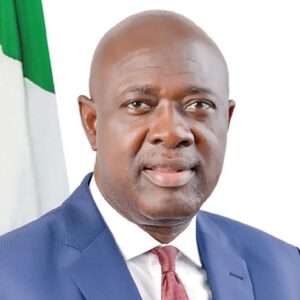
The Minister of State for Petroleum Resources (Oil), Heineken Lokpobiri, made the call on Wednesday in Abuja at the maiden 2026 Petroleum Technology Development Fund Journal Summit. He said reforms in the petroleum sector were aimed at rebuilding investor confidence and establishing a more stable and predictable environment for private investment.
The PTDF Journal has over the years served as a platform for research and technical contributions to Nigeria’s petroleum industry. The agency has described its publications as part of its wider efforts to promote education, research and innovation, while its intervention repository currently lists 15,639 sponsored scholars and more than 1,700 research works.
The summit was held under the theme, “Private Sector Participation in Nigeria’s Midstream and Downstream Petroleum Sector: Prospects, Challenges and the Way Forward.”
Represented by his Technical Adviser, Emmanuel Sinime, Lokpobiri said Nigeria’s crude oil output had increased from approximately one million barrels per day in 2023 to above 1.7 million barrels per day, while the number of active drilling rigs had risen from around 14 to more than 60.
He said, “The federal government, under the able leadership of His Excellency Bola Tinubu, recognises that sustainable development of the Nigerian petroleum sector requires strong and vibrant private sector participation. The government’s role is to establish and enable a policy and regulatory environment, provide strategic directions, and ensure transparency and accountability.
“The ongoing reforms in the petroleum sector are therefore designed to restore investors’ confidence, improve regulatory certainty, and create conditions for sustainable private sector investment across the oil and gas value chain.”
The minister, however, stressed that increased upstream production would have limited economic benefits without adequate infrastructure for the transportation, storage, refining and efficient distribution of petroleum products.
He pointed to the Dangote Petroleum Refinery and the growth of modular refineries, including Waltersmith and Aradel, as examples of how private investment could transform Nigeria’s downstream petroleum industry.
Lokpobiri said, “Increased production must be matched by adequate infrastructure, efficient transportation and storage systems, expanded refining capacity, and a competitive market that delivers value to consumers and investors.”
He added that the government, working through the Nigerian Midstream and Downstream Petroleum Regulatory Authority, was taking steps to improve domestic gas pricing, establish measures against anti-competitive behaviour and guarantee fair access to pipelines, depots and terminals.
The minister identified infrastructure shortages, high logistics expenses, regulatory unpredictability, fluctuations in the market and difficulties in securing financing as key challenges that could discourage investment.
“The issue will not judge us by the number of regulations that we issue or guidelines that we actually publish, but history will judge us by the number of businesses we actually inflate, the investment that we actually attract, the benefits of life that come out of these regulations,” he said.
Also speaking, the Minister of State for Petroleum Resources (Gas), Ekperikpe Ekpo, said private investment would be essential to fully develop Nigeria’s vast gas resources.
Ekpo noted that the Petroleum Industry Act had established a framework for greater regulatory certainty, while the Federal Government’s Decade of Gas Initiative was intended to leverage gas for industrial development, job creation, energy security and economic diversification.
He said Nigeria needed to attract capital into gas processing, transportation and distribution, as well as LPG, CNG, petrochemical and other gas-related industries.
“The federal government cannot achieve this objective alone. We must continue to deepen collaboration with private investors, financial institutions, technology providers, and other stakeholders to mobilise the capital and expertise required to deliver these projects,” he said.
He listed infrastructure shortages, expensive financing, project development risks, regulatory challenges and limited access to dependable energy infrastructure among the issues confronting investors.
Ekpo also encouraged PTDF to deepen partnerships with universities, research organisations and industry players to ensure research produces practical solutions capable of being commercialised.
The Executive Secretary of PTDF, Prof. Shuaibu Aliyu, said the inaugural summit was intended to move discussions contained in the Petroleum Technology Development Journal beyond academic publication and towards practical solutions for the industry.
He explained that the Journal connects researchers, academics, industry experts and policymakers by sharing research findings, technical innovations and knowledge about the petroleum sector.
According to Aliyu, PTDF would continue working to ensure research findings progress from publication to real-world application, intellectual property creation and commercialisation.
Aliyu said, “The growing involvement of private investors in refining, gas processing, logistics, storage, and the distribution of petroleum products presents substantial opportunities for economic growth, job creation, technology development, and building local capacity.
“However, we are also confronted with challenges related to financing, infrastructure, regulatory certainty, access to technology, market efficiency, and technical capacity, all of which require open and constructive discussion.”
In his keynote presentation, the Managing Director of Waltersmith Petroman Oil Limited, Oladapo Filani, said Nigeria’s focus should no longer be limited to producing skilled workers but should also include retaining expertise and transforming knowledge into technology, businesses and economic benefits.
Filani said PTDF had funded more than 15,639 scholars and supported over 50,000 research projects, but noted that developments in the petroleum industry required a fresh approach to human capital development.
“The challenge is no longer simply to produce skilled Nigerian; it is to retain that expertise, create opportunities to apply it and to convert knowledge into technology, businesses and economic value,” he said.
He listed infrastructure shortages, skills gaps, access to finance, commercial viability and uncertainty surrounding investments as interconnected challenges affecting the midstream and downstream sectors.
Filani stressed that Nigeria required engineers, project managers, process specialists and commercial experts equipped to manage increasingly sophisticated refineries, gas facilities, pipelines and other energy infrastructure.
He said, “For private investors, the central issue is not simply whether Nigeria has significant oil and gas resources, but whether projects can generate predictable, competitive, risk-adjusted returns.”
Filani further called for the development of an integrated energy system where shared pipelines, gas processing facilities, storage, electricity and logistics infrastructure could support multiple operators and industries.
“This is not integration for its own sake. It is about connecting different parts of the value chain in ways that can improve economics, create market access, reduce infrastructure constraints and generate additional value to all stakeholders,” he said.