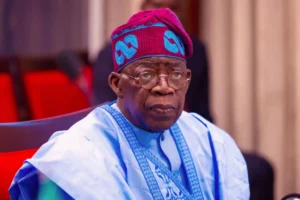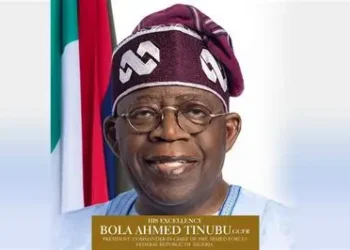


President Bola Tinubu on Thursday said Nigeria had passed through the most difficult stage of his administration’s economic reforms, declaring in his Independence Day address that the country was transitioning from an “age of reform” to an “age of prosperity.” He also cautioned against politicians advocating a return to fuel subsidies ahead of the 2027 general elections.
In his national broadcast to mark Nigeria’s 66th Independence Anniversary, Tinubu, whose address was themed “From Reform to Prosperity,” defended the decisions to remove the petrol subsidy and unify the naira exchange rate. He compared Nigeria’s economic situation to that of a cancer patient who must undergo painful treatment rather than rely on the “morphine” of temporary relief used by previous administrations.
“Nigeria was like a sick patient who receives the terrible news that he has cancer,” the President said. “His doctor explains that the treatment will be difficult and painful, but that it offers a strong prospect of recovery. The patient has a choice. He can begin treatment, endure its discomfort and fight the disease. Or he can ask only for morphine, dull the pain and leave the cancer to spread.
“For too long, Nigeria’s leaders chose morphine while praying for a miracle that never came.”
Tinubu maintained that the reforms introduced by his administration were not responsible for the country’s economic challenges but were aimed at addressing long-standing problems that successive governments had failed to tackle.
“Our reforms did not create the weaknesses in our economy. They confronted them,” he said.
Three and a half years into his administration, the President said the impact of the reforms was “undeniable.” He disclosed that the Nigerian economy expanded by more than four per cent in 2026, with both the oil and non-oil sectors contributing to what he described as a return to stable growth.
According to him, oil theft had reduced, inflation had dropped considerably from its peak, foreign reserves had increased, while stability had returned to the foreign exchange market.
He also announced that Nigeria recorded its highest-ever non-oil export revenue in 2025, surpassing $6 billion.
“This is real money being made by real Nigerian businesses,” he said, adding that international observers, journalists, non-governmental organisations and multilateral institutions had recognised the reforms as strengthening Nigeria’s economic stability and resilience. He further said foreign direct investment was continuing to increase.
Tinubu said the focus of his administration’s economic agenda had now shifted, with the country moving from the task of fixing its economic direction to pursuing “shared and widespread prosperity.”
“The emergency treatment is over. The foundation has been repaired,” he said. “For three years, our overriding purpose was to correct our nation’s course. Now, our purpose is simple: shared and widespread prosperity.”
The President said prosperity should be measured beyond economic statistics, describing it as a situation where farmers can work safely and earn reasonable returns, factories have dependable electricity, businesses can access credit, young Nigerians have productive employment and families can afford essential needs such as food, transportation and education.