

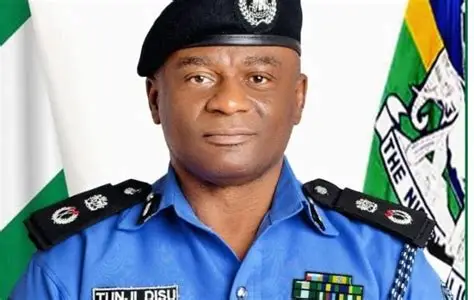
The Inspector-General of Police, Olatunji Disu, has called on Nigerians and security stakeholders to avoid ethnic and religious profiling in the fight against insecurity, stressing that criminal activities should not be associated with any particular ethnic or religious group.
Disu made the call on Wednesday while delivering the opening address at the North-West Security Summit in Gusau, Zamfara State.
The police chief urged stakeholders to concentrate on tracking down criminal networks, their sponsors, arms suppliers, informants and other facilitators, regardless of their ethnic, religious or social backgrounds.
The three-day summit, organised by the Zamfara State Government, brought together governors, traditional rulers, heads of security agencies, development partners, civil society organisations, security experts and other stakeholders to examine the security challenges confronting the North-West.
Issues discussed at the summit included banditry, kidnapping, arms trafficking, communal conflicts, farmer-herder disputes and other threats to peace and stability in the region.
Disu said the scale and complexity of insecurity in the North-West required a collective response, noting that no single security agency, government or institution could tackle the problem alone.
He called for improved intelligence sharing among states and security agencies, closer inter-state cooperation, joint operations, stronger border controls and more effective early-warning systems.
The IGP also highlighted the importance of traditional rulers and local communities in combating crime, urging them to provide reliable intelligence and support efforts aimed at preventing criminal activities.
He reaffirmed the commitment of the Nigeria Police Force to intelligence-driven policing, the use of technology, rapid response operations, cooperation among security agencies and stronger partnerships with communities.
Disu challenged participants at the summit to produce clear and measurable recommendations that would improve security, protect vulnerable communities and rebuild public confidence across the North-West.
He maintained that the fight against terrorism and other forms of criminality should be driven by facts and intelligence rather than ethnic or religious assumptions.